
How to Stay Calm in a Crisis as a Leader
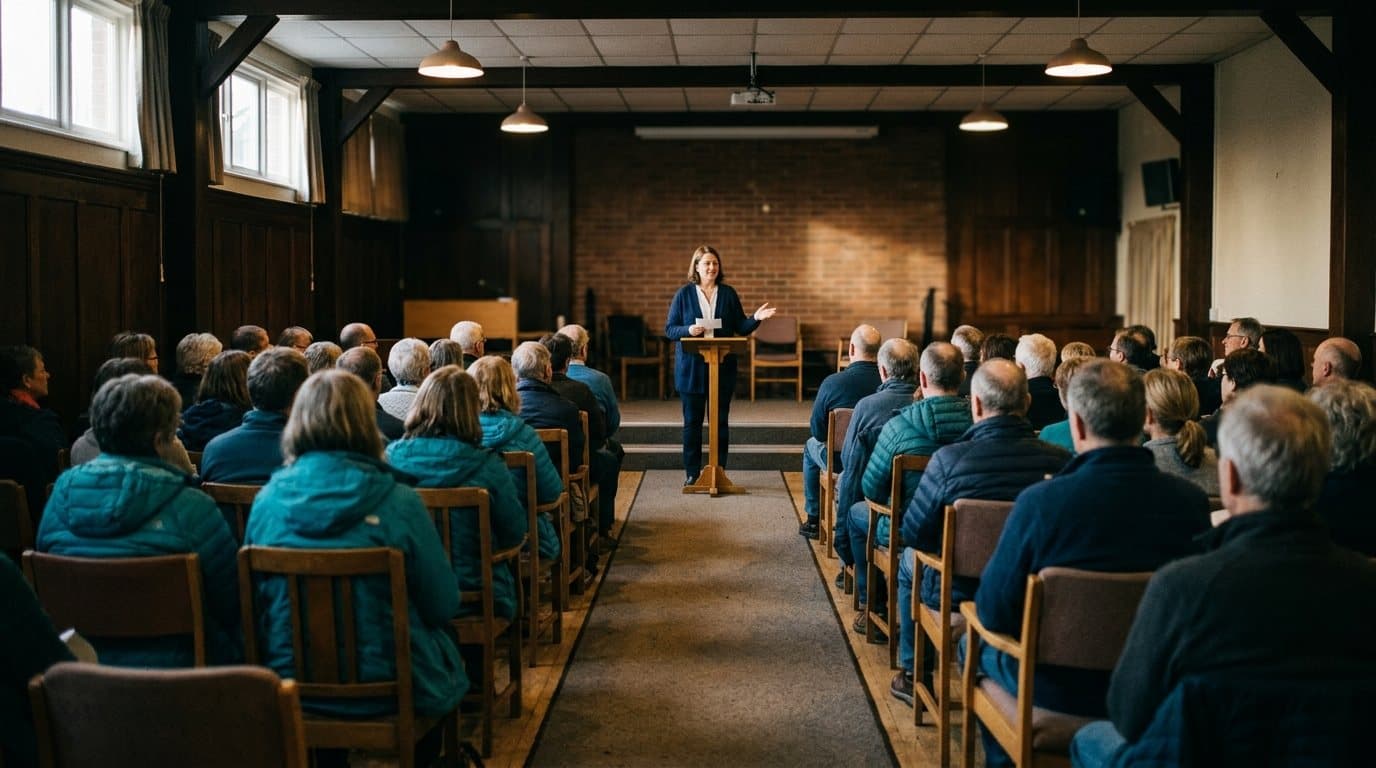
Picture a crisis meeting forty minutes in: phones lighting up, a lawyer flagging exposure, someone drafting a holding statement with shaking hands. Now look for the person who isn't moving fast, whose voice hasn't risen. They are rarely the most senior person in the room. They are simply the one whose nervous system hasn't joined the panic, and that single fact changes how everyone around them behaves.
Melissa Agnes opens this session by circling back to the four levels of safety she covered the session before, then states her real claim plainly.
The truth about safety is that safety comes from within. And oftentimes, we see people misguidedly, because they don't know better, nobody taught them better, look for safety outside of themselves.
What Equanimity Means for a Leader
She calls this inner state equanimity, and she is precise about what she means by it.
It refers to a state of mental balance and even-mindedness, especially in difficult situations. So equanimity is the liberating quality that allows us to keep our hearts open and balanced, quiet and steady, regardless of external circumstances. I view equanimity as internal peace and therefore ultimate freedom.
The Most Regulated Person in the Room
She has a saying for what happens next, one she uses often but doesn't claim to have coined: the most regulated person in the room is the most powerful person in the room. A dysregulated group doesn't choose calm, it looks for it.
So if you walk into a room where everybody else's nervous system is frantic or is simply dysregulated, and you are composed and you're in equanimity. You've found your equanimity. You're in that place of inner safety, inner alignment... And you show up in that state, instantly, instinctively, you are the most powerful, most potent person in the room because now your system is regulating, it's co-regulating everybody else's nervous system. This is science. This is just how we work.
Month five of the Crisis Masterclass builds this exact regulation skill, with the guided practice this excerpt leaves out.
See what's insideYour Writing Carries Your State
If you are writing and drafting your communications from that calm, aligned, centered space and place within yourself, you are putting an energetic stamp of safety into those words, and that energy follows those words and lands in the systems of those who read the words or hear the words.
That same regulation shows up on the page, not just in the room. A holding statement drafted in a panicked forty minutes tends to read exactly like that: rushed and over-qualified, the same problem covered in why you can't beat emotion with logic.
Regulate is the first step of the crisis-ready formula, with a worked example and a template.
Read the formulaWhat Jacinda Ardern Did During Lockdown
Melissa Agnes points to Jacinda Ardern's COVID-era Facebook Lives as her example, though she is careful to say the words below are her own paraphrase, not a documented quote.
I think Jacinda Ardern was a brilliant example of this during COVID when New Zealand was on lockdown, and she would host these Facebook Lives with a country of five million people, and you could see her strength, you could see her resilience... But she didn't shy away from saying, and I'm not quoting verbatim, but she didn't shy away from saying, 'I'm scared, too. This is unprecedented in the history of the world. Nobody has all the answers, and that's scary.'
Own the Fear First
Steadiness starts with honesty about the fear underneath it, she says.
The answer is that you start by owning your truth. If you can't admit to yourself that you're scared, that you're uncertain, that not everything is in your power, in your control, that you don't have all the answers and that scares you on some level. If you can't first admit it to yourself, then you're not going to be able to find your equanimity.
She gives the same instruction to anyone stuck drafting copy they privately don't believe, the same discernment test she uses to decide whether something is even an issue or a crisis.
My response to that was, if you don't buy and believe in what you are writing, delete your page or open up a new blank page. Take all of the fear and everybody else's fears out of your brain. Breathe... Find your center, and write from your heart, write from your place. Write from there, because that will stamp it with that energy. From there, you can edit.
The same discernment test applies when you're deciding whether something is even a crisis yet.
Run the checkA Practical Starting Point
How to Stay Calm in a Crisis as a Leader, Before the Next Meeting
You don't need the full course to start. Before your next crisis meeting, take two minutes: breathe slowly in through the nose and out through the mouth, and let your shoulders drop before you walk in. Melissa Agnes's own homework for this session runs longer: three five-minute sessions a day for at least a week.
Where This Fits in the Crisis Masterclass
Regulate is the first of four steps in Melissa Agnes's crisis-ready formula, set out in the newsletter breakdown. The same discipline underpins the high-stakes comms formula. Session five sits inside month five of the Crisis Masterclass, delivered with the guided practice this article leaves out.
Frequently asked questions
How do I stay calm in a crisis as a leader?
Start with your own state before you touch the messaging. Crisis communications trainer Melissa Agnes teaches that a leader who is composed, even briefly, steadies the room around them faster than any script does. A practical starting point is two minutes of slow breathing before you walk into the next crisis meeting, building from there.
What does equanimity mean in crisis leadership?
Equanimity is the inner steadiness a leader holds onto regardless of what is happening around them: mental balance, an open and quiet state, rather than forced calm on the surface. Melissa Agnes teaches it as something a leader builds deliberately, not a personality trait some people simply have and others don't.
Why does the calmest person in a room have influence in a crisis?
A dysregulated group looks for steadiness even when it isn't consciously aware it's doing so, and organises around whoever provides it. That's the practical case for crisis leadership under pressure: the composed person in the room, not necessarily the most senior one, ends up shaping how everyone else responds.
What did Jacinda Ardern do during COVID that's relevant to crisis leadership?
During New Zealand's lockdown, Jacinda Ardern paired visible strength in her Facebook Lives with plain admissions that she was scared too. Crisis trainer Melissa Agnes points to this as a model: name the fear honestly, then follow it with reassurance and a plan, rather than projecting false certainty.

Melissa Agnes
Founder, Crisis Ready Institute
Based in the USA, Melissa is a recognised leading authority on crisis communication, crisis leadership and brand protection. Best-selling author of 'Crisis Ready: Building an Invincible Brand in an Uncertain World', and creator of the Crisis Ready® Model which has been globally recognised as having elevated industry best practice, she has worked with ministries of foreign affairs and defence, NATO and many other leading organisations.
Melissa Agnes is the founder of the Crisis Ready Institute and creator of the Crisis Ready® Model. Her Crisis Ready course is part of the Crisis Masterclass, available in Australasia only through My PR Partner. See the program.
The quoted passages are drawn from session five of the Crisis Ready® course, a certification session delivered inside Melissa Agnes's own coaching frame. This excerpt leaves out the guided breathing script, the homework protocol, and the electromagnetic-field and physiological material from that session; the framing and explanation around the quotes are ours.